Behind the Calls of Sports Officiating
By: Tyler Cheung
“That’s terrible ref!” We’ve all heard it, whether it’s from someone screaming at their TV, a fan shouting in a packed stadium, or a parent screaming at their kid’s game. Across every level of all sports, officials are constantly criticized and blamed for poor performances of players and teams.
One controversial call can take over the headline of an entire game. Behind every whistle, is someone who needs to make split-second decisions on plays that often don’t have a definitive correct call. While coaches and players are deservingly praised in the world of sports, officials are often left with little appreciation.
Jim Sutter, former coach of Jeremy Lin, has been a high school basketball and football official for a long time.
“Officials really don’t care who wins even though everyone thinks that they are against them,” Sutter said. “Every call, 50% of the people are not going to like it.”
A big contributor to the constant criticism of officials is that the average fan doesn’t fully understand the rules. Because of this, many officials get serenaded for calls that they correctly made.
“Everyone thinks that they know the rules but they really don’t,” Sutter said. “Most people don’t fully understand over and back in basketball or even when the three second count would start. They have zero clue as to where the players are supposed to be placed in a football formation. There is a true lack of respect towards officials.”
In-person spectators often think that they can help their team by criticizing officials, but their heckling often disrupts the flow of the game.
Israel Sarrano, admin and training coordinator of Bay Area Sports Officials (BASO) is someone who develops the next generation of basketball officials.
“Parents don’t realize their attitude towards officials indirectly affects their own child’s experiences,” Serrano said. It also teaches and shows poor examples of how a simple judgment call from an official can change an entire mood and outcome of a kid’s performance.”
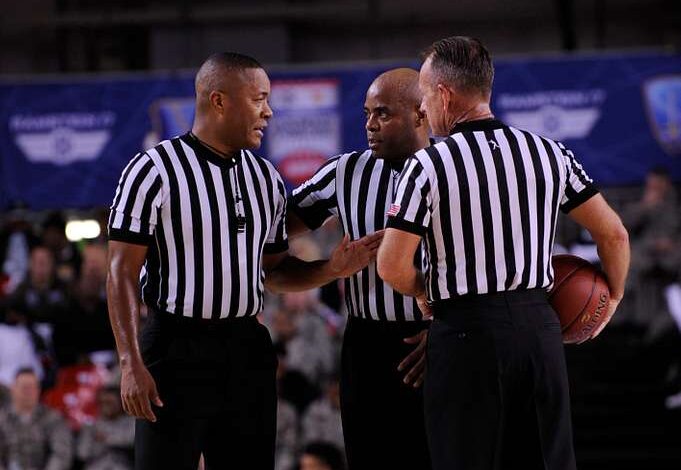
Maintaining that flow of the game is an essential skill as an official. Beyond making accurate calls, officials have to communicate with the scoreboard operator, score table, and their partner.
“While reffing, there is an art to the rhythm and pace of sports that makes not only the playing aspect but also the viewing part more enjoyable,” middle school official and high school basketball coach Kai said. “In my opinion, maintaining this rhythm is more important than 100% accuracy during a game.”
With college basketball season approaching, it is important to remember that making quick split second calls is no easy task.