
Launch into Space Exploration: The Latest Moon Mission.
By: Madison Sottile
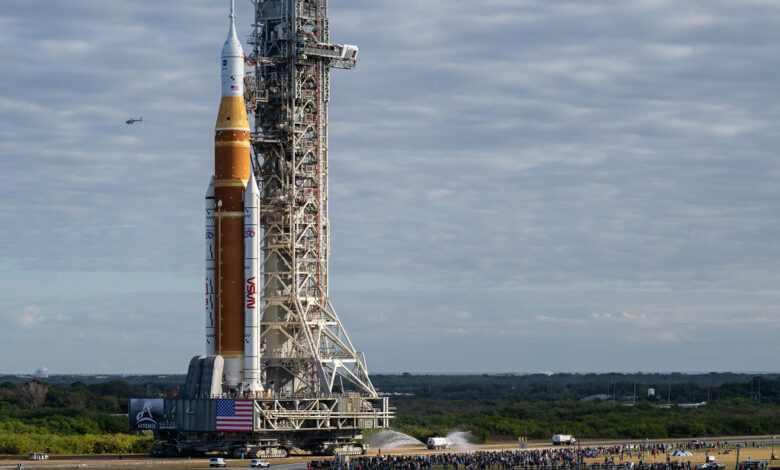
It has been over 50 years since humans last visited the moon. Artemis II launched from Kennedy Space Center on April 1st, marking the start of the 10-day mission to circumnavigate the moon. While a full moon landing is not planned for this voyage, this is a much-needed step towards developing modern space exploration.
A crew of four astronauts is leading the first crewed mission of NASA’s Artemis program. This program aims to land humans on the Moon by 2028 and eventually establish a base there. Artemis II will allow observations that have never been made before. Viewing the far side of the moon that never faces Earth will give further insight into the asymmetry that scientists theorize. The crew will get as close as 5000 miles from the moon’s surface for these observations. The photos and findings aim to strengthen scientific understanding and determine landing sites for the future Artemis missions.
Christina Koch, one of the crew members, became the first woman to ever voyage to the moon and has been a NASA astronaut since 2013. Also on the voyage is Victor Glover, the first African American to go to the moon, who piloted the first operational SpaceX Crew Dragon to the International Space Station. Jeremy Hansen, the first Canadian on such a mission, joined the 614 Royal Canadian Air Cadet Squadron at just 12 years old. This mission is a historical feat for many reasons and will only accelerate progress. Reid Wiseman, a former Navy test pilot, is commanding the mission after almost 17 years as an astronaut.
The crew will conduct research about potential space travel hazards for future missions. They will collect data on microgravity and radiation impacts on the human body. They will reenter Earth’s atmosphere with parachutes and land in the Pacific Ocean on Apr. 10. Artemis II holds long-awaited answers to scientific questions and propel research into a new age of exploration.