NYS DEC providing safety tips for upcoming solar eclipse
WATERTOWN, N.Y. (WWTI) – The New York State Department is advising the public on how to enjoy the April 8 total solar eclipse across the state.
In a press announcement, Commissioner Basil Seggos provided valuable tips to help the public prepare to recreate safely and responsibly as New Yorkers count down the days to the highly anticipated total solar eclipse, which occurs exactly four weeks from today.
While DEC law enforcement and operations staff will be prepared for visitors, eclipse watchers are encouraged to find Adirondack destinations outside the backcountry or opt for visiting one of the many designated viewing locations across the state.
The the roughly 100-mile-wide path of totality across Upstate New York will begin near Jamestown, Chautauqua County, at approximately 3:16 p.m. Eastern Daylight Time and exit near Plattsburgh, Clinton County, at approximately 3:29 p.m.
Cities and towns within the path of totality also include Buffalo, Niagara Falls, Rochester, Syracuse, Watertown, Old Forge, and Lake Placid.
DEC, in partnership with New York State partner agencies, encourages eclipse viewers to prioritize safety by observing all rules and regulations, and at all times, to be respectful of others and our shared environment.
NYS DEC Commissioner Basil Seggos
While it is highly preferred for eclipse visitors to head to these scheduled events, remember these key safety tips and general rules for the eclipse viewing:
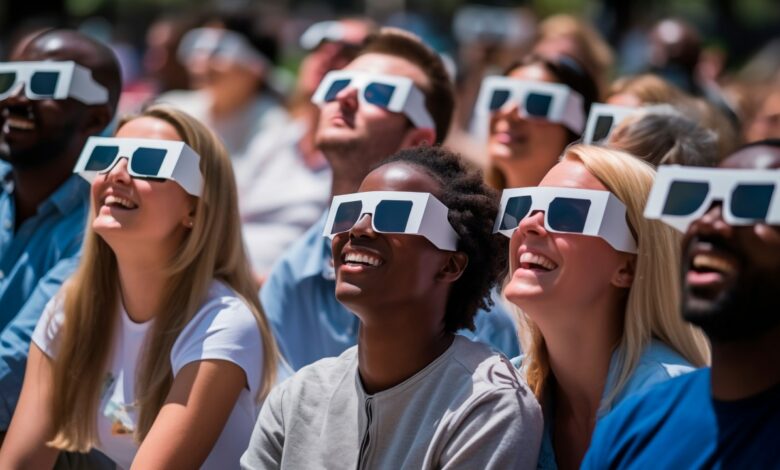
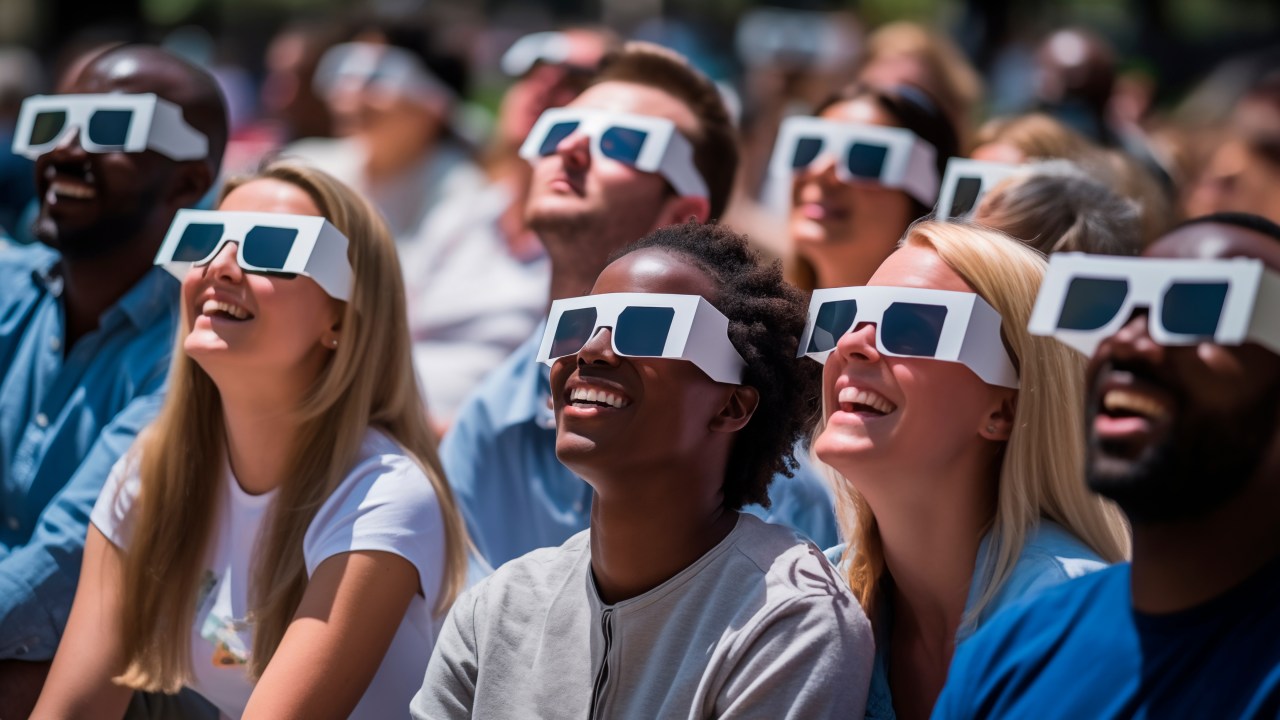
- Protect your eyes: Do not look directly at the sun during the eclipse. According to the National Aeronautics and Space Administration, viewing any part of the sun through a camera lens, binoculars, or a telescope without a special-purpose solar filter secured over the front of the optics will instantly cause severe eye injury. Some of the best ways to view a solar eclipse include through a pinhole projector where you look at a projected image through a pinhole in cardboard paper, or by using International Organization for Standardization (ISO) 12312-2 certified eclipse glasses from a trusted source. Regular sunglasses, polarized or otherwise, are not a safe replacement for solar eclipse glasses. Do not walk or drive while wearing eclipse glasses. The glasses are specially designed for viewing the eclipse. Further information about safe viewing can be found on the American Astronomical Society website.
- Road safety: Traffic volume is expected to be very high on the day of the eclipse. Plan on staying in one place for the day and allow for plenty of extra travel time.
- Use 511NY for travel conditions. Streets or bridges may be closed and extensive traffic jams are possible. 511NY apps can be downloaded on Apple and Android
- Pack vehicles with water, fuel, medications, and food.
- Do not stop to view the eclipse along the roadway, especially interstates, parkways, and freeways. Choose a safe viewing destination off the road and arrive early.
- Observing all rules and regulations when visiting State lands: All State land regulations remain in effect in the days leading up to, during, and after the eclipse. Anyone visiting State Forests or Forest Preserve lands in the Adirondack and Catskill Park must observe all designated rules and regulations to protect fellow visitors as well as the forest environment, including restrictions on group sizes.
- Because large groups are more likely to have an impact on trails and other natural resources, groups of more than 20 people and those that wish to visit state land for weddings, filmmaking, research, and other uses must get a Temporary Revocable Permit (TRP) from a DEC land manager. Note that both the High Peaks Wilderness area and the Catskills Wilderness area have lower group size limits.
- In the Adirondacks and Catskills, mud season is late March through May and DEC recommends staying on trails below 2,500 feet to protect the resource and the recreating public. For more, see DEC’s Spring Recreation tips.
- Regulations vary for Wildlife Management Areas (WMAs), but still require TRPs. Overnight camping and fires, except for cooking or personal warmth, are prohibited in WMAs. Also prohibited are motorized vehicles like trucks, cars, motorcycles, ATVs, and snowmobiles.
- Because large groups are more likely to have an impact on trails and other natural resources, groups of more than 20 people and those that wish to visit state land for weddings, filmmaking, research, and other uses must get a Temporary Revocable Permit (TRP) from a DEC land manager. Note that both the High Peaks Wilderness area and the Catskills Wilderness area have lower group size limits.
- Eclipse, fire safety, and the New York State Burn Ban: The New York State Burn Ban begins March 16 and runs through May 14. It will be in effect during the 2024 eclipse. The annual burn ban began in 2009 and is enforced to prevent wildfires and protect communities during heightened seasonal conditions for wildfires. This season, extra vigilance is important because the past winter season was warmer and drier than normal, leaving dormant vegetation from last year exposed and susceptible to fire. For more information, visit https://dec.ny.gov/news/press-releases/2024/2/dec-reminds-new-yorkers-annual-residential-brush-burning-prohibition-starts-march-16.
Public safety challenges for such an event include traffic management, communications capabilities, and public health and safety. State, county, and local public safety and emergency management efforts are being tailored to the anticipated needs of those who come to view the eclipse from both inside and outside the state.